Money page, done right
Attic Insulation in Nogales, Rio Rico & Santa Cruz County
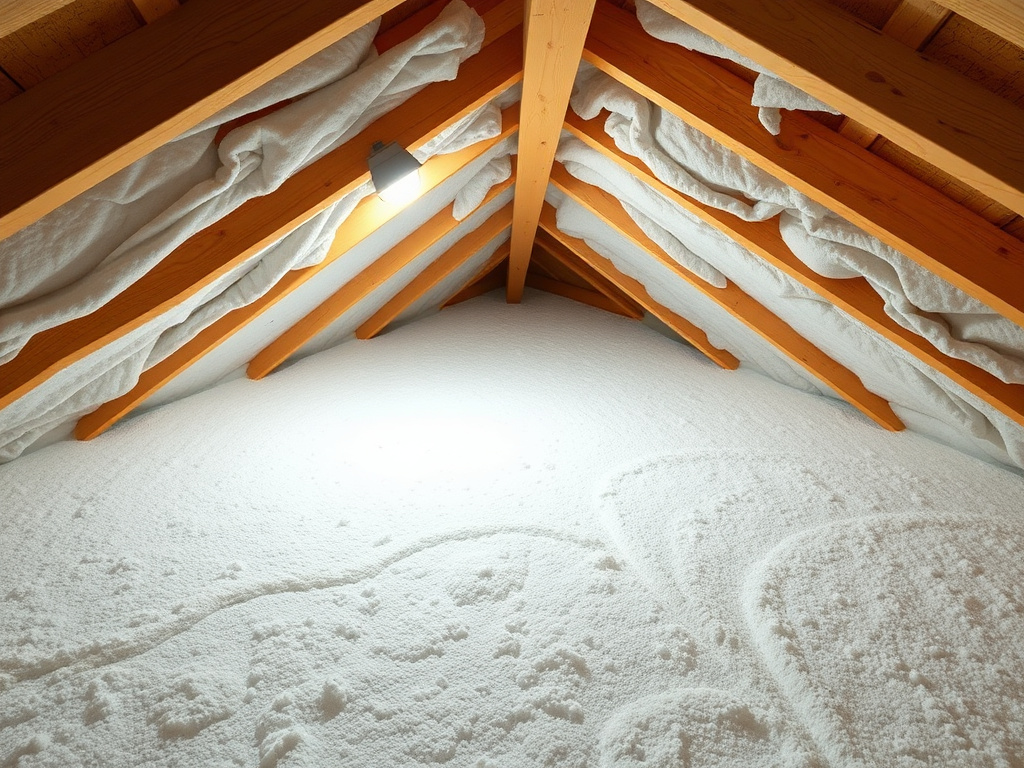
Your attic is the single hardest-working surface on the house — it fights 120–140°F summer heat buildup and freezing winter nights within the same 24-hour cycle. We spec attic insulation for that two-way reality, not a copy-paste desert template.
The Zone 3B attic problem
Your attic works against you twice a day, not once a season
Santa Cruz County sits in IECC Climate Zone 3B — a genuinely different planning problem than Phoenix's Zone 2B low desert. Phoenix homes fight an almost entirely one-directional battle: keep summer heat out, and the heating season barely registers. An attic in Nogales, Rio Rico, or anywhere across Santa Cruz County fights a two-way battle instead. Ambient summer highs here typically run 90–100°F, milder than Phoenix's 110–118°F — but a vented attic still commonly climbs to 120–140°F under a summer sun, because a dark asphalt roof deck absorbs and re-radiates heat regardless of how mild the air temperature reads on the thermometer.
Then night falls, and especially from December through February, outdoor temperatures regularly drop to just below freezing. A poorly sealed attic doesn't just stop protecting your home from heat at that point — it becomes the fastest path for the warm, conditioned air you're paying to heat to escape straight up and out. An attic that only had to solve one of those problems could get away with a mediocre spec. Ours has to solve both, on the same day, most days of the year.
This is exactly the gap a generic statewide insulation package misses. A crew that only works Phoenix jobs specs for cooling load and stops there, because that's genuinely all a 2B attic needs. Apply that same spec here and you'll get a home that's merely okay in summer and drafty and expensive to heat all winter — a double miss disguised as a single fix.
The other piece of the Zone 3B picture most quotes ignore entirely is elevation. Santa Cruz County spans roughly 3,230 feet in Tubac to nearly 4,885 feet in Sonoita — a genuine 1,650-foot gradient inside one service area. A Sonoita attic and a Nogales attic are in the same climate zone on paper, but they are not living through the same winter. We'll come back to that in more detail below, because it changes what we actually recommend on a given job — not just how we talk about it.
Two approaches, one honest comparison
Sealed roof-deck foam vs. air-seal-plus-blow-in
There are two legitimate ways to fix a Santa Cruz County attic, and neither one is automatically the right answer for every house. We walk the attic, look at the roof structure and ductwork, and recommend the approach that actually fits — then explain why, in plain terms, before you sign off on anything.
| Sealed / unvented roof-deck foam | Spray foam applied directly to the underside of the roof deck, moving the thermal and air boundary from the attic floor to the roofline. The attic becomes part of the conditioned building envelope — no more 120–140°F attic air sitting directly above your ceiling drywall all summer, and far less heat pulled straight out of that same space on a freezing winter night. |
|---|---|
| Air-seal + blow-in | The attic floor stays the thermal boundary. Every top-plate gap, can-light housing, plumbing penetration, and attic-hatch edge gets sealed first, then loose-fill insulation is added over the floor to the target depth. Less expensive per square foot, and a reasonable fit for homes where the roof deck isn't a good foam candidate (recent reroof, ventilation-dependent shingle system, budget-driven scope). |
| How we choose | We look at your roof age and structure, attic access, ductwork location (ducts inside a sealed roof-deck assembly perform very differently than ducts sitting in blown-in insulation), and budget before recommending one approach over the other — not a single default answer applied to every house in the county. |
Both approaches can hit code-derived R-value targets. The real difference is where the thermal boundary lives and how your ductwork and roof structure interact with it.
R-value targets
What we actually spec for a Santa Cruz County attic
We treat R-38 at the attic floor as the code-derived floor for this region, and R-49 as the target we recommend by default for new work and most full retrofits — the same higher bar that current code guidance points toward. A sealed roof-deck foam assembly reaches an equivalent performance level differently, since the R-value math for a foam roof deck isn't a direct floor-insulation comparison; we'll walk you through the actual numbers for your specific roof during the quote, not a generic table.
| R-38 | The floor-level, prescriptive minimum we treat as the baseline target for attic-floor insulation in this region under current code-derived guidance. |
|---|---|
| R-49 | The recommended target for new work and most full retrofits — the level we spec by default unless a specific constraint (budget, structural, access) calls for a documented exception. |
| Walls (reference) | R-13 minimum cavity fill is the comparison point most homeowners ask about — attic work is usually the higher-impact first move, since heat gain and heat loss both hit the roofline hardest. |
Cost & the UES rebate
What attic insulation runs, and how the UES rebate actually works
For a typical 1,500–2,200 sq ft home, a sealed roof-deck spray foam project generally runs in a rough $2,000–$5,000 installed range. Air-seal-plus-blow-in usually costs less per square foot, since it's a simpler assembly with lower material and labor intensity. Both numbers move with your attic's access (walk-up vs. scuttle-hole-only), roof pitch, whether old insulation has to come out before new material goes in, and — for rural Santa Cruz County properties — straightforward site-remoteness and scheduling factors. Treat every figure on this page as a directional planning number. Your actual quote comes from a walkthrough of your attic, not a phone estimate.
UniSource Energy Services runs the rebate that actually applies here — not an SRP or APS program, since those serve Phoenix metro, a different utility territory entirely. UES's Efficient Home Program, administered by Franklin Energy, pays 50% of installed cost up to $250 for air-sealing alone, or up to $800 when air-sealing and insulation are done as a combined project. Eligibility requires a home built in 2005 or earlier, with the home and any guest house combined at 3,500 sq ft or less, and the property not already enrolled as a UES Energy Smart Home.
We can tell you during your quote whether your property looks like a fit for the program, and we'll walk you through what Franklin Energy needs on their end — reachable at 866-540-4315 or UniSourceEfficientHome@FranklinEnergy.com if you want to confirm eligibility directly. Because the combined-project cap applies to air-sealing plus insulation done together, bundling the two into one scope is usually the better move financially, not just operationally.
One more thing worth stating plainly: the federal Energy Efficient Home Improvement Credit (Section 25C) ended for insulation installed after December 31, 2025, under the One Big Beautiful Bill Act. We're not going to advertise a federal incentive that no longer applies to a 2026 install. The UES program above is the real, currently-live incentive for this region — we'd rather tell you that plainly than let a stale national article set the wrong expectation.
For a deeper walk through cost tables by project type — home attic, garage/shop, ranch outbuilding, and commercial cold-storage — see our 2026 cost and climate guide, or start with a full home energy audit if you want a prioritized picture of where your house is losing conditioned air before you commit to attic work.
Elevation-band nuance
A Sonoita attic and a Nogales attic aren't the same job
Every community in our service area sits in IECC Zone 3B on paper, but that single zone designation hides a real, 1,650-foot elevation gradient across a compact area. We spec accordingly, not off one generic Santa Cruz County number.
3,230 ft
Tubac
3,865 ft
Nogales
4,200 ft
Patagonia
4,885 ft
Sonoita
A Sonoita property near 4,885 feet sees noticeably colder, longer winter nights than a Nogales property near 3,865 feet, even though both fall under the same climate-zone label. That matters directly for attic work: a higher-elevation home loses conditioned air through an unsealed attic faster and for more hours of the year, which shifts the return-on-investment math toward air-sealing quality and toward the sealed roof-deck approach, since it eliminates the vented-attic cold sink entirely rather than just slowing it down.
A Tubac or lower-elevation Nogales-area home still gets real winter cold — this isn't Phoenix — but the summer heat-gain side of the ledger carries relatively more weight there than it does up in Patagonia or Sonoita. We don't hand every customer in the county the same attic spec off one assumed elevation; we ask where the property actually sits and adjust the recommendation, particularly around R-value targets and whether air-sealing alone gets you most of the way there or whether the roof deck itself is the better move.
Monsoon humidity
Air-sealing does double duty during monsoon season
Santa Cruz County's monsoon, running July through August, delivers a proportionally heavier share of the region's roughly 19 inches of annual precipitation than Phoenix's lower-desert monsoon signal — real, humid air moving through the region for weeks at a stretch. An attic with gaps at the top plates, can-light housings, and duct penetrations doesn't just leak conditioned air; it gives that humid outside air a direct path into the attic cavity and, in a poorly sealed assembly, toward living space. Sealing those same penetrations as part of an attic project controls both problems with one scope of work — it isn't a separate monsoon-specific add-on, it's the same air-sealing detail work done well.
Sealed roof-deck spray foam goes a step further, since a properly installed foam assembly also functions as an air barrier across the entire roof plane rather than relying on dozens of individually sealed penetrations to add up to a tight attic. That's one more reason it's our default recommendation where the roof structure supports it.
What we check before we quote
Our process, start to finish
Attic walkthrough
We physically get into the attic — not just a driveway estimate — to check existing insulation depth, access, roof structure, ductwork location, and any signs of old leaks or pest activity.
Approach recommendation
We tell you plainly whether sealed roof-deck foam or air-seal-plus-blow-in fits your home, and why, along with a directional cost range and whether the UES rebate looks applicable.
Prep & install
Old insulation is removed if needed, penetrations and top plates are sealed, and foam or blow-in material is installed to the agreed spec — typically completed in a single work day for most homes.
Walkthrough & rebate paperwork
We walk the finished attic with you, confirm depth and completeness across the attic floor, and help assemble whatever documentation the UES Efficient Home Program requires on your end.
A common question we get on older Nogales-area homes: does adding attic insulation put a roof's shingle warranty at risk? For a standard vented-attic air-seal-and-blow-in project, no — you're not altering the roof assembly itself. A sealed, unvented roof-deck foam job does change how the attic ventilates, which is exactly why we confirm the shingle manufacturer's unvented-assembly requirements before that scope is finalized, and why attic ventilation isn't simply removed without checking what the specific roofing system calls for. This is a walkthrough-and-confirm step on every sealed-attic job, not an afterthought.
Common questions
Attic insulation FAQ
Is sealed roof-deck foam always better than air-seal-plus-blow-in for an attic in this area?
+
Not automatically. Sealed roof-deck foam moves your attic inside the conditioned envelope and handles both the summer heat-gain problem and the winter heat-loss problem in one assembly, which is why we lead with it for most Santa Cruz County homes. But a recent reroof, a ventilation-dependent shingle system, ductwork already routed with the vented-attic assumption in mind, or a tighter budget can make a well-executed air-seal-plus-blow-in job the more sensible call. We walk the attic and give you a straight recommendation rather than defaulting to the higher-cost option.
How much does attic insulation cost in Nogales and Santa Cruz County?
+
For a typical 1,500–2,200 sq ft home, a sealed roof-deck foam job generally runs in a rough $2,000–$5,000 installed range, with air-seal-plus-blow-in usually landing lower. Both figures move with attic access, roof pitch and geometry, whether old insulation needs to come out first, and site remoteness for rural Santa Cruz County properties. Treat any number on this page as a planning estimate — your quote is based on a walkthrough of your specific attic, not a phone-quoted average.
Does the UniSource Energy Services rebate cover my attic project?
+
It can, if your home qualifies. UES's Efficient Home Program pays up to 50% of installed cost — capped at $250 for air-sealing alone, or up to $800 when air-sealing and insulation are done together — for homes built in 2005 or earlier, with the home and any guest house combined at 3,500 sq ft or less, and not already enrolled as a UES Energy Smart Home. We can tell you during the quote whether your property looks like a fit and walk you through what Franklin Energy (UES's program administrator) needs to process it.
Is the federal tax credit for attic insulation still available in 2026?
+
No. The federal Energy Efficient Home Improvement Credit (Section 25C) ended for any insulation installed after December 31, 2025, under the One Big Beautiful Bill Act. We won't advertise a federal credit that no longer applies — the UES program above is the incentive that's actually live in 2026.
Get your attic specced for both seasons, not just one
Tell us about your home and where it sits in the county — we'll walk the attic, recommend the right approach, and check whether the UES rebate applies.
Related reading
Go deeper before you commit
Home Energy Audits
A thermal-imaging and blower-door look at where your home is actually losing conditioned air before you commit to an attic scope.
2026 Cost & Climate Guide
Full cost tables by project type, plus the Zone 3B dual-season savings math for Santa Cruz County.
Insulation Removal
When old, settled, or contaminated attic insulation needs to come out before new material goes in.