Out with the old, done right
Attic Insulation Removal & Replacement — Nogales & Santa Cruz County
Old, settled, or rodent-contaminated attic insulation isn't just underperforming — on ranch and rural Santa Cruz County properties, it's often a genuine contamination problem. We remove it the right way and get your attic ready for real insulation performance.
When removal is actually necessary
Four situations where topping off the old insulation isn't the answer
Not every attic needs a full removal. But across Santa Cruz County's mix of older in-town housing, newer Rio Rico subdivisions, and ranch and rural properties spread across the county, we run into a few recurring conditions where adding new insulation over what's already there just locks in the underlying problem.
| Rodent / pest contamination | A genuine, common issue on ranch and rural Santa Cruz County properties — packrats, mice, and other rodents nest in attic insulation, leaving droppings, urine staining, and matted or tunneled material that can't simply be topped off with new insulation. |
|---|---|
| Matted or aged insulation | Loose-fill insulation settles and compacts over decades, losing much of its original R-value. Fiberglass batts sag, gap, and pull away from framing. Adding new material over badly degraded old material rarely gets you back to a real target R-value. |
| Smoke or water damage | Insulation that's absorbed moisture from a roof leak or plumbing failure, or that's been exposed to smoke, typically needs to come out rather than be dried in place and reused. |
| Pre-foam prep | Converting an attic to sealed roof-deck spray foam often means clearing the existing floor insulation first, especially where old material is blocking access to top plates and penetrations that need to be sealed properly. |
Rodent and pest pressure is the one that surprises people the most, and it's a genuinely regional issue rather than a generic pest-control talking point. Ranch and rural properties around Patagonia, Sonoita, and greater Santa Cruz County sit closer to open land and outbuildings than a typical in-town Nogales lot, and packrats and mice reliably find their way into attic spaces through soffit gaps and roofline penetrations. Once a colony has been active in an attic, the insulation itself becomes the problem — droppings, urine staining, and tunneled or matted material that no longer performs anywhere near its original R-value, and that isn't something a fresh layer on top can fix.
Older homes near Nogales' historic downtown-adjacent corridor bring a different consideration: homes built before roughly 1990 sometimes have vermiculite-based attic insulation, a material that needs to be positively identified and handled carefully rather than assumed to be ordinary fiberglass or cellulose. We screen for this specifically on pre-1990 structures before any removal work starts, since it changes the handling and disposal process.
And if you're planning a conversion to sealed roof-deck spray foam, removal is frequently part of the prep — see our attic insulation page for how that assembly works and why clearing the floor insulation first is usually the cleaner path to a properly sealed roofline.
Our process
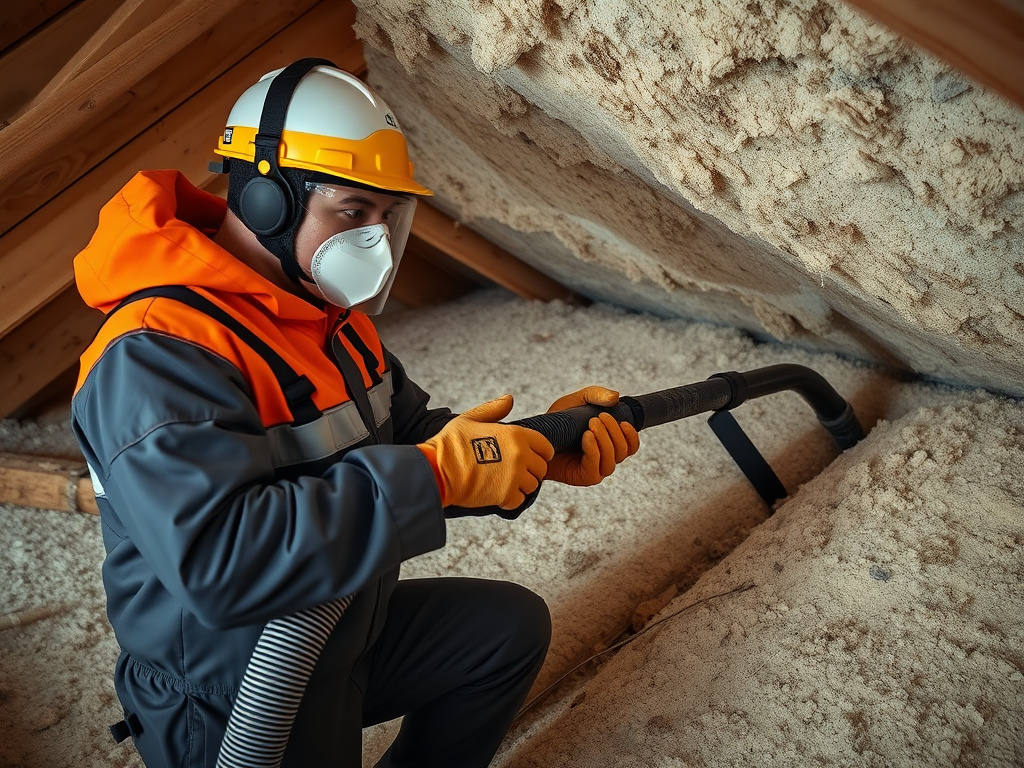
HEPA extraction, sanitize, seal, re-insulate
Removal isn't just pulling material out and hauling it away. Done properly, it's a sequence that protects your indoor air quality during the job and sets the attic up to actually perform once new insulation goes back in.
HEPA-filtered extraction
Old insulation is removed using HEPA-filtered vacuum equipment that captures fine particulate and airborne contaminants rather than stirring them loose into the attic and home.
Bag-out & disposal
Removed material is bagged and sealed at the point of extraction, then carried out and disposed of properly rather than staged loose in the attic or garage.
Sanitize & seal entry points
The cleared attic space is sanitized, and any rodent or pest entry points at soffits, eaves, and roofline penetrations are identified and sealed so the problem doesn't simply come back with the new insulation.
Re-insulate
New insulation — spray foam or blow-in, depending on what we agreed on during the quote — goes in to the target R-value, with a final walkthrough so you can see the finished attic before we close out the job.
Why this isn't a DIY project
The health case for calling a crew instead of grabbing a shop vac
Contaminated attic insulation carries real health risk once it's disturbed. Rodent droppings and dried urine can aerosolize during removal, mold from past moisture exposure can release spores into the air, and old fiberglass or cellulose sheds fine particulate that a household vacuum simply isn't built to contain. None of that is unique to this region — but the rodent-contamination piece shows up often enough on Santa Cruz County ranch and rural properties that we treat proper containment as standard practice on every removal job, not an upsell.
A shop vac without HEPA filtration pulls fine particles through the motor and back out into the air rather than trapping them, which means a DIY removal attempt can spread contaminated material through the attic hatch and into living space far more effectively than it removes it. Add in the possibility of vermiculite in a pre-1990 home, and the case for a properly equipped crew — respiratory protection, sealed bagging, and HEPA extraction from the start — gets even stronger. This is one job where the visible mess isn't the actual risk; what you can't see in the air is.
There's also a practical reason to have a crew handle it rather than tackling a weekend project yourself: identifying what you're actually looking at. Matted cellulose, degraded fiberglass, rodent nesting debris, and vermiculite can look similar from the attic hatch, and the correct handling procedure is different for each one. We make that call before removal starts, not partway through a job you've already begun on your own.
Cost, timeline & the combo package
What removal actually runs, and pairing it with new spray foam
Removal cost depends far more on condition and access than on square footage alone. A lightly settled, uncontaminated attic with good walk-up access is a fairly quick, lower-cost job. A heavily rodent-contaminated attic with poor access — common on some of the older ranch structures we see across Patagonia, Sonoita, and rural Santa Cruz County — takes longer and costs more, because the extraction, bagging, and sanitizing steps all take real time to do properly. Treat any figure you see as a directional planning range; your actual number comes from a walkthrough, not a phone estimate.
Older homes near Nogales' historic downtown-adjacent corridor add one more variable worth mentioning upfront: pre-1990 construction sometimes means checking for vermiculite before a crew starts pulling material, which can add a short identification step to the front of the job. We'd rather build that check into the schedule from the start than discover it mid-removal and have to pause work to confirm what we're dealing with.
Most standalone removal jobs on an accessible residential attic wrap in a single work day. Heavier contamination, poor access, or a larger ranch structure can extend that timeline. Removed material is bagged at the point of extraction and hauled out for proper disposal as part of the job — it doesn't sit in your garage waiting on a second trip.
Rural properties further from Nogales proper — out toward Patagonia, Sonoita, or deeper into the county — may see a slightly longer dispatch window than an in-town job simply due to drive time. We'd rather tell you that upfront and schedule around it than surprise you with a delay once the crew is already committed to the day.
If you're already planning a new spray foam install, pairing removal with the install as a combo package is usually the more efficient path — one mobilization, one crew, one attic opened up once instead of twice. It also means the sealing and sanitizing step happens right before new material goes in, rather than leaving a gap where the attic sits open and exposed.
For the install side of that pairing, see our attic insulation page for how we choose between sealed roof-deck foam and air-seal-plus-blow-in, or our open-cell spray foam page if you already know foam is the direction you want to go.
What to expect on job day
What we handle so you don't have to
- ✓Full attic assessment before removal starts, including a check for rodent/pest activity and pre-1990 vermiculite screening
- ✓HEPA-filtered vacuum extraction to control airborne particulate during removal
- ✓Bag-out and proper disposal of removed material — nothing left staged in your garage
- ✓Sanitizing of the cleared attic space and sealing of identified rodent or pest entry points
- ✓A finished walkthrough once new insulation is installed, so you can see the completed work before we close out the job
Common questions
Insulation removal FAQ
Do I need to remove old insulation before spray foaming my attic?
+
It depends on the approach and the condition of what's already up there. Converting to a sealed roof-deck foam assembly usually requires clearing existing floor insulation so we can seal top plates, penetrations, and framing properly before foam goes in. If your existing insulation is in reasonable shape and you're doing an air-seal-plus-blow-in project instead, we may be able to work around it or supplement it rather than remove it entirely. We'll tell you which applies to your attic during the walkthrough.
How do you know if insulation has rodent or pest contamination?
+
Visual signs include matted or tunneled material, droppings, urine staining, nesting debris, and a distinct odor, most often near soffit vents, eave gaps, or anywhere a rodent can find an entry point into the attic. This is a genuinely common finding on ranch and rural properties across Santa Cruz County, where outbuildings and open land put homes closer to rodent populations than a typical in-town lot. If we find contamination, we'll show you what we're seeing before removal starts, not after.
Is it safe to remove old attic insulation myself?
+
We don't recommend it. Old insulation can carry rodent droppings and urine residue, mold from past moisture exposure, and airborne fiberglass or cellulose particles that get stirred up the moment material is disturbed. Attics also commonly hide vermiculite-based insulation in homes built before roughly 1990, which needs to be identified and handled with real care rather than bagged up with a shop vac. A DIY removal without proper respiratory protection, sealed bagging, and a HEPA-filtered vacuum can spread contaminated material into living space through the attic hatch and HVAC returns.
How much does insulation removal cost in Santa Cruz County?
+
Cost depends heavily on how much material is coming out, how contaminated or matted it is, attic access, and whether removal is a standalone job or paired with a new spray foam install. Treat any number as a directional planning range until we've walked your specific attic — contamination level and access are the two biggest cost drivers, more than square footage alone.
Get your attic assessed before you decide anything
Rodent contamination, matted insulation, or a straightforward pre-foam clear-out — tell us what you're seeing and we'll walk the attic and give you a straight recommendation.
Related reading
Go deeper before you commit
Attic Insulation
Sealed roof-deck foam vs. air-seal-plus-blow-in, R-value targets, and the UES rebate walkthrough for a fresh attic install.
Open-Cell Spray Foam
What open-cell foam is, where it fits best, and how it performs in this region's genuine dual-season climate.
Home Energy Audits
A full picture of where your home is losing conditioned air, including attic insulation depth and condition.